The FYZICAL Difference
Train Without Fear of Falling
Our Safety Overhead System lets patients push harder, recover faster, and rebuild confidence that no handrail can give them.
Request an Appointment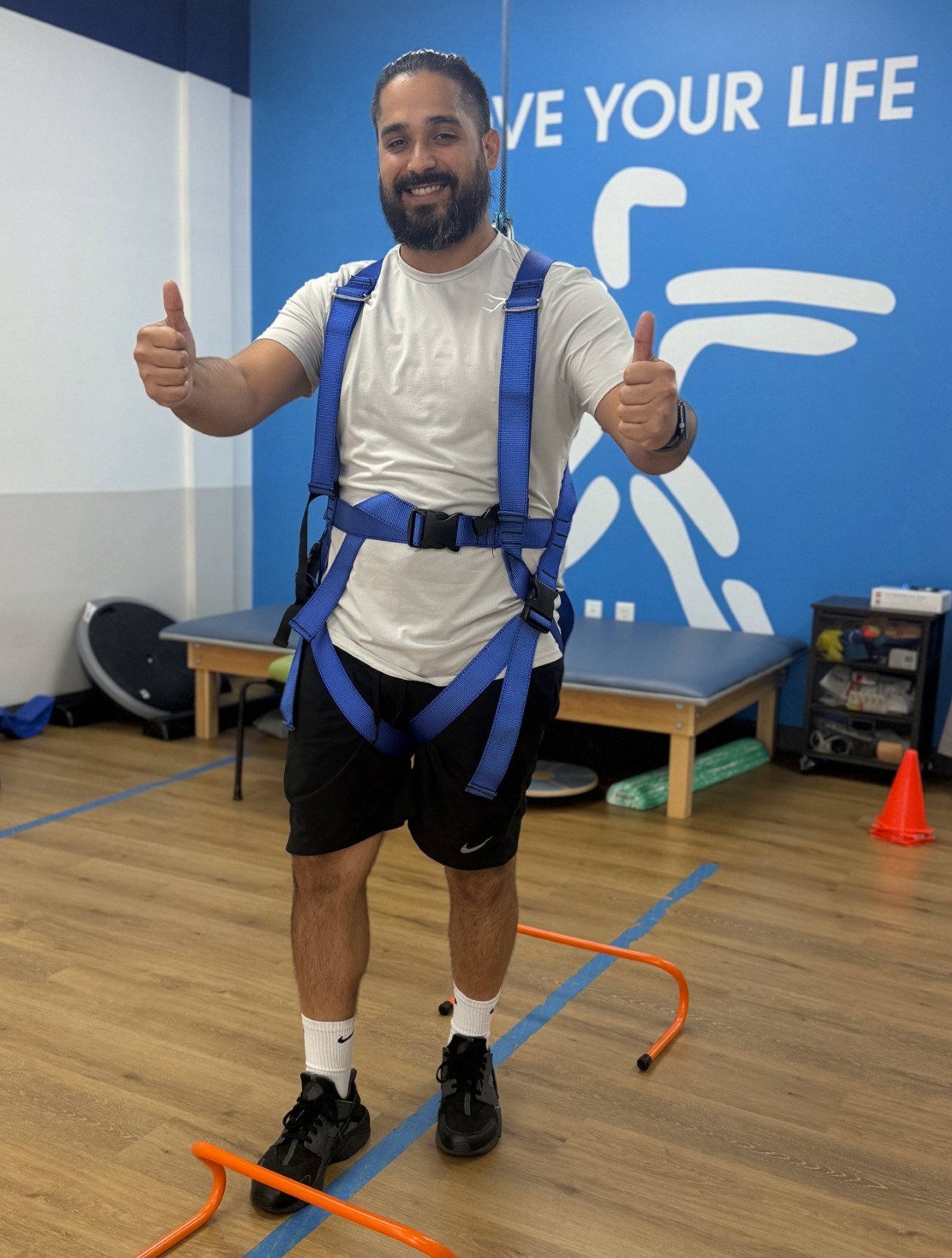
What the Safety Overhead System Is
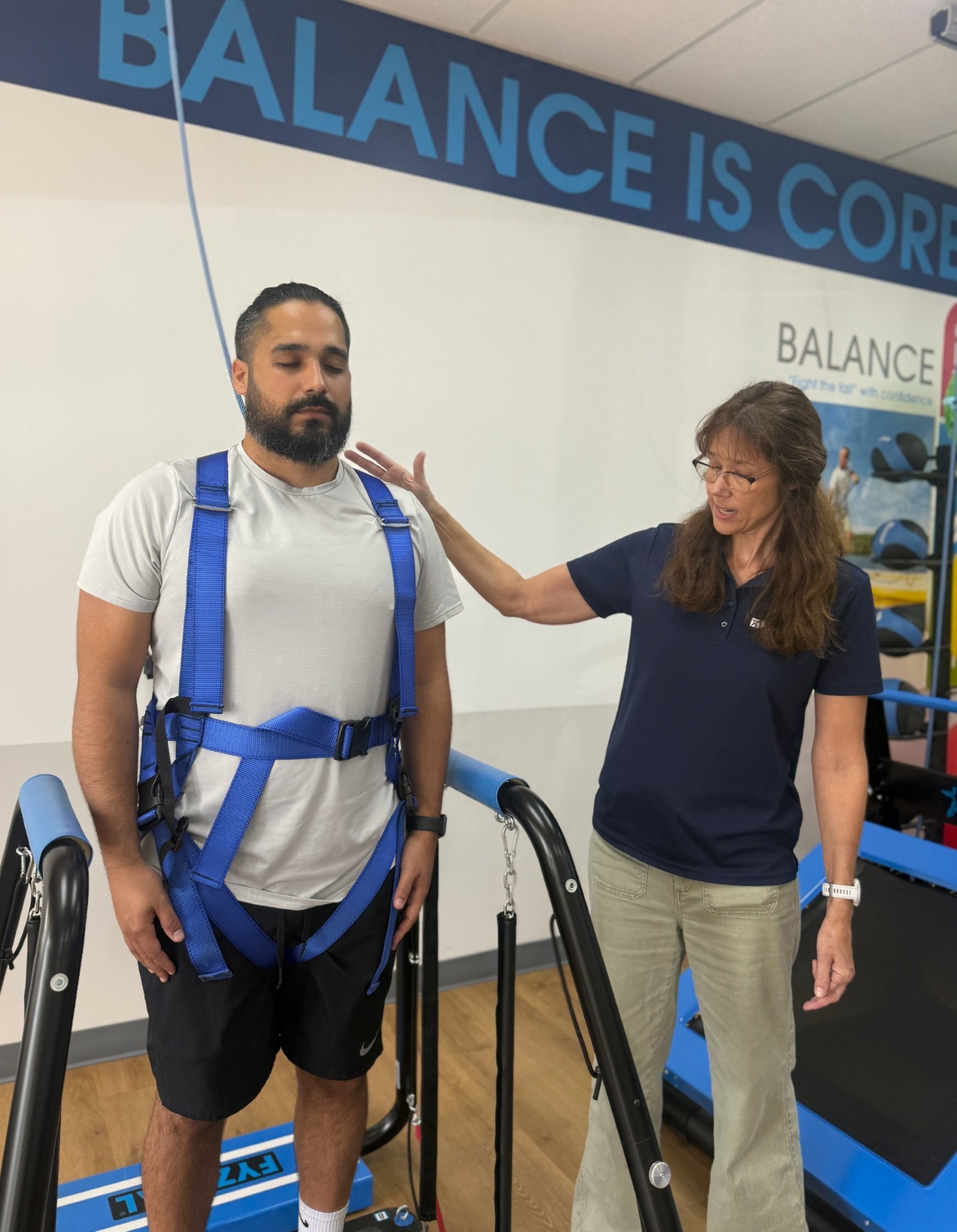
The Safety Overhead System is a ceiling-mounted harness that supports patients during balance and mobility exercises. You are secured from above, which means if you lose your balance, you cannot fall.
That sounds simple. The effect it has on recovery is not.
Most balance patients spend their therapy sessions gripping a rail, leaning on a therapist, or holding back because they are afraid of what happens if they let go. That fear is completely reasonable. It is also the thing that slows recovery down the most.
When you know you cannot fall, something changes. You stop bracing. You stop compensating. You start actually training your balance system instead of just surviving the exercise.
That is where real progress happens.
Why It Matters More Than You Think
My grandfather hunted all over the world his entire life. He traveled to remote places, built relationships across continents, and lived the kind of life most people only read about. Then one day he stopped.
Not because of an injury. Not because of a diagnosis. Because he was afraid he might fall out in the field.
He never fell once in his life. But the fear was enough.
That story is not unusual. Fear of falling is one of the most common reasons older adults stop doing the things they love. It quietly shrinks their world — fewer trips, fewer activities, less time with the people they care about.
Physical therapy cannot fix that fear by telling someone to be careful. It fixes it by proving to their body, through real movement and real training, that they are stable again.
The Safety Overhead System makes that possible faster than anything else we have found.
Who Benefits From the SOS
The system is not just for elderly patients. It helps anyone whose recovery is being held back by fear of movement or instability.
Balance & Vestibular Disorders
Patients with BPPV, vertigo, or chronic dizziness can challenge their balance system at full effort without fear of a fall setting back their progress.
Post-Surgical Recovery
After hip or knee replacement, patients often move cautiously long after the surgery has healed. The SOS removes that hesitation and speeds the return to normal gait.
Neurological Conditions
Patients with Parkinson's, stroke, or other neurological conditions affecting balance and gait can train more aggressively and safely at the same time.
Fall Prevention
For patients who have fallen before or who are at high risk, the SOS builds real confidence through real training — not just exercises that feel safe because nothing challenging is happening.
The Difference Between Gripping a Rail and Actually Training
A handrail teaches your body to rely on something that will not always be there. A therapist's hand does the same.
The SOS is different. It is a safety net, not a crutch. Your body still has to do the work. Your balance system still has to fire. Your muscles still have to respond. The only thing the SOS removes is the consequence of failing — which is exactly what gives patients the freedom to try.
That freedom is what changes outcomes.
"When you know you cannot fall, you stop holding back. That is where recovery actually starts."
Serving patients from Orlando, Casselberry, Winter Park, Altamonte Springs, Maitland, Oviedo, Winter Springs, Fern Park, Longwood, and Seminole County.
Get Started Today
Ready to Get Back to Living?
Tell us what is going on. We will call you back, figure out if we are the right fit, and get you scheduled. A real person picks up the phone here.