Balance & Vestibular Therapy
Vertigo and Balance Treatment in Orlando, FL
Dizziness, vertigo, and balance problems are not something you have to live with. Most cases respond quickly to the right physical therapy — sometimes within just a few visits.
Request an Appointment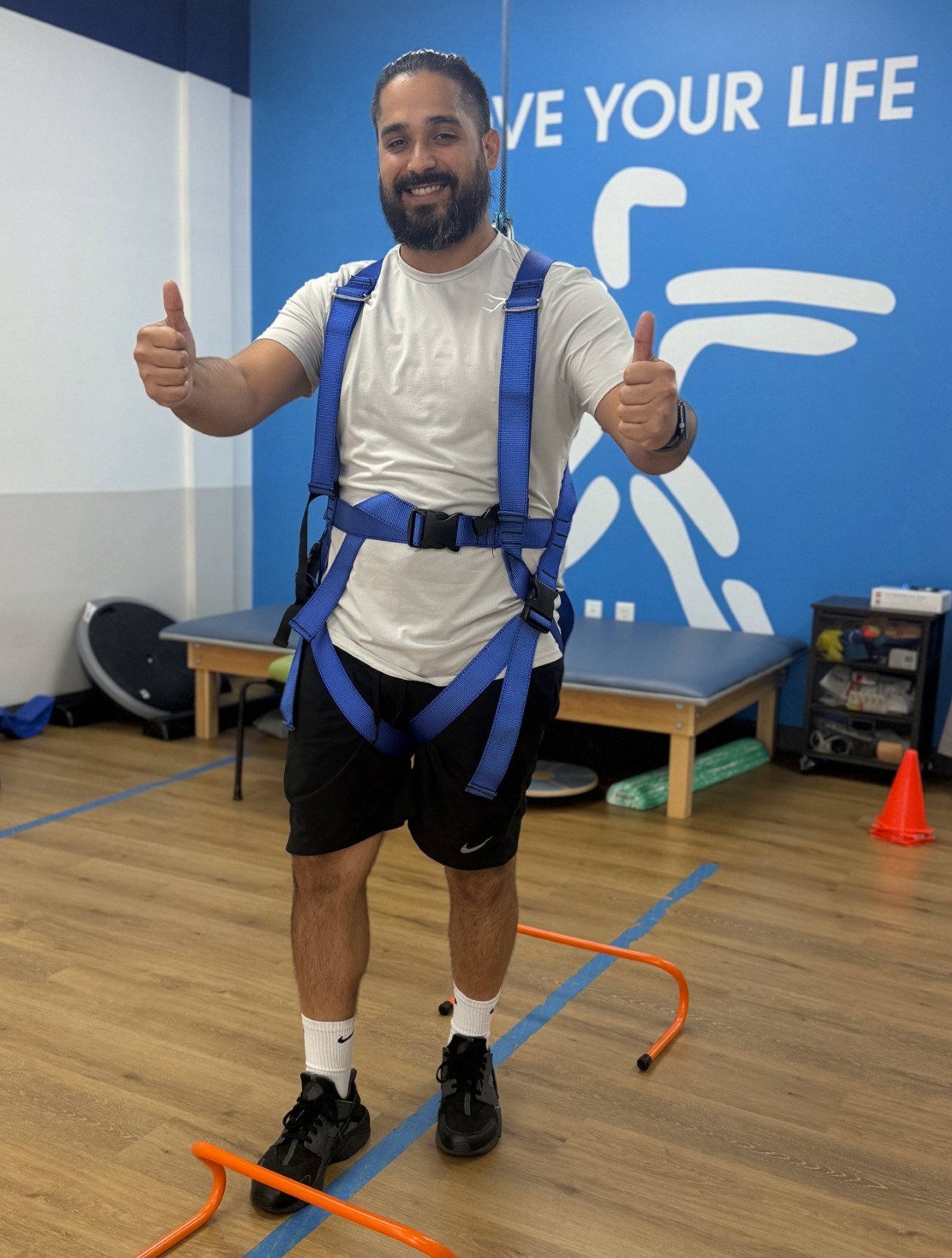
What Is Actually Happening When You Feel Dizzy
Your balance system is not just your inner ear. It is a conversation between three systems — your inner ear, your eyes, and your joints and muscles — all sending signals to your brain at the same time. When those signals disagree, your brain gets confused. That confusion is what you feel as dizziness or vertigo.
Most people assume dizziness is just something that happens as you get older, or that it means something is seriously wrong. Neither is usually true. The most common cause of vertigo is BPPV — benign paroxysmal positional vertigo — and it is highly treatable with the right physical therapy.
The key word is right. Not every PT clinic specializes in vestibular disorders. At FYZICAL Therapy Orlando, balance and vestibular rehab is one of our primary focuses. Paul Pacpaco has treated hundreds of patients with dizziness and balance disorders, and the outcomes speak for themselves.
Conditions We Treat
Balance and vestibular disorders come in many forms. These are the ones we see and treat most often.
BPPV (Benign Paroxysmal Positional Vertigo)
The most common cause of vertigo. Tiny calcium crystals in the inner ear become displaced, triggering sudden spinning sensations with certain head movements.
Vestibular Neuritis
Inflammation of the vestibular nerve that disrupts communication between the inner ear and brain, causing persistent dizziness and balance problems.
Chronic Dizziness & PPPD
Persistent postural-perceptual dizziness — constant unsteadiness and motion sensitivity that can develop after an initial vestibular event.
Meniere's Disease
Episodes of intense vertigo, ringing in the ears, and hearing changes caused by fluid pressure changes in the inner ear.
Post-Concussion Vestibular Dysfunction
Balance and dizziness problems that persist after a concussion, requiring specialized vestibular rehabilitation.
Age-Related Balance Decline & Fall Risk
Gradual loss of balance stability that increases fall risk — highly responsive to targeted balance training and the Safety Overhead System.
BPPV: The Condition That Changes Lives in a Few Visits
One of our patients had been dizzy every single day for two months. She had stopped doing yardwork. Stopped going places she loved. The dizziness was constant and it was shrinking her world.
After a few sessions with Paul, it was gone.
Her condition was BPPV. The treatment was the Epley maneuver — a precise sequence of guided head movements that repositions the displaced calcium crystals in the inner ear back where they belong. When it works, and it often works quickly, the relief is almost immediate.
BPPV accounts for a large percentage of vertigo cases. It is also one of the most undertreated conditions in medicine — because most people never connect their dizziness to something a physical therapist can fix in a few visits.
If you have been dizzy for weeks or months and nobody has checked you for BPPV, that is the first thing we do.
The FYZICAL Difference
Training Balance Without Fear of Falling
Most balance patients hold back during therapy. They grip rails. They lean on their therapist. They do just enough to get through the session without falling — and never push hard enough to actually retrain their balance system.
Our Safety Overhead System changes that completely.
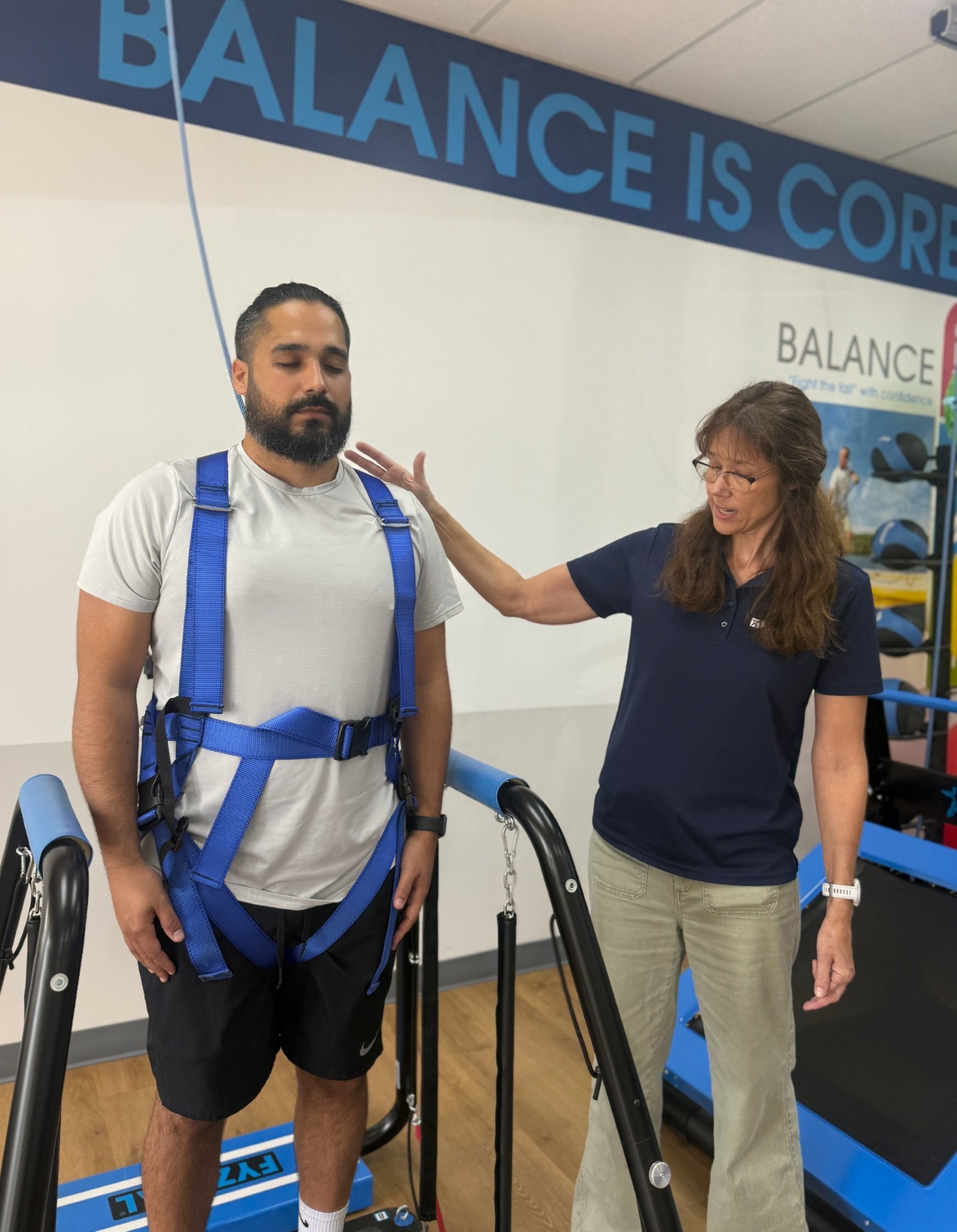
The SOS is a ceiling-mounted harness that supports patients from above. You are secured, which means you physically cannot fall. And when patients know that, something shifts. They stop bracing. They stop compensating. They actually train.
That is where real vestibular recovery happens — not in the cautious, guarded movements of a patient who is afraid, but in the full, confident movements of someone who knows they are safe.
What Vestibular Physical Therapy Looks Like
Your first visit is an evaluation. Paul will assess your balance, test your eye movements, evaluate your gait, and identify which part of your vestibular system is involved. That assessment drives everything.
- 01
Vestibular Assessment
Comprehensive evaluation of balance, eye movement, gait, and positional testing to identify the specific cause of your dizziness or instability.
- 02
Repositioning or Rehab Plan
For BPPV, treatment often begins immediately with canalith repositioning maneuvers like the Epley. For other conditions, a structured rehab plan is developed around your specific deficits.
- 03
Progressive Balance Training
Gaze stabilization exercises, balance challenges, and movement retraining — often using the Safety Overhead System to allow full effort without fear of falling.
- 04
Home Program & Discharge
You leave each session with exercises to practice at home. Most BPPV patients resolve in 1 to 3 visits. General vestibular rehab typically takes 6 to 12 sessions over 6 to 12 weeks.
Who Should Consider Vestibular Physical Therapy
You may benefit from vestibular PT if you experience:
- Spinning sensations when you move your head
- Dizziness that comes and goes without warning
- Feeling unsteady or off-balance when walking
- Nausea triggered by movement or visual motion
- Dizziness that has lasted more than a few days
- A history of falls or near-falls
- Fear of falling that is limiting your activities
- Dizziness after a concussion or head injury
- Diagnosis of BPPV, Meniere's, or vestibular neuritis
- Dizziness that gets worse in busy visual environments
You do not need a doctor's referral to start. Florida is a direct access state — call us and we can get you evaluated quickly.
"My mother suffered from vertigo so severe she could not leave the house for days at a time. She walked out of a movie theater because the motion on screen was too much. Nothing helped for years. Then she saw a physical therapist and was better within a few visits. That experience is a big part of why I work here."
Common Questions About Vertigo and Balance Therapy
Get Started Today
Ready to Get Back to Living?
Tell us what is going on. We will call you back, figure out if we are the right fit, and get you scheduled. A real person picks up the phone here.